To Be a Steward: A Conversation with Paige Emery
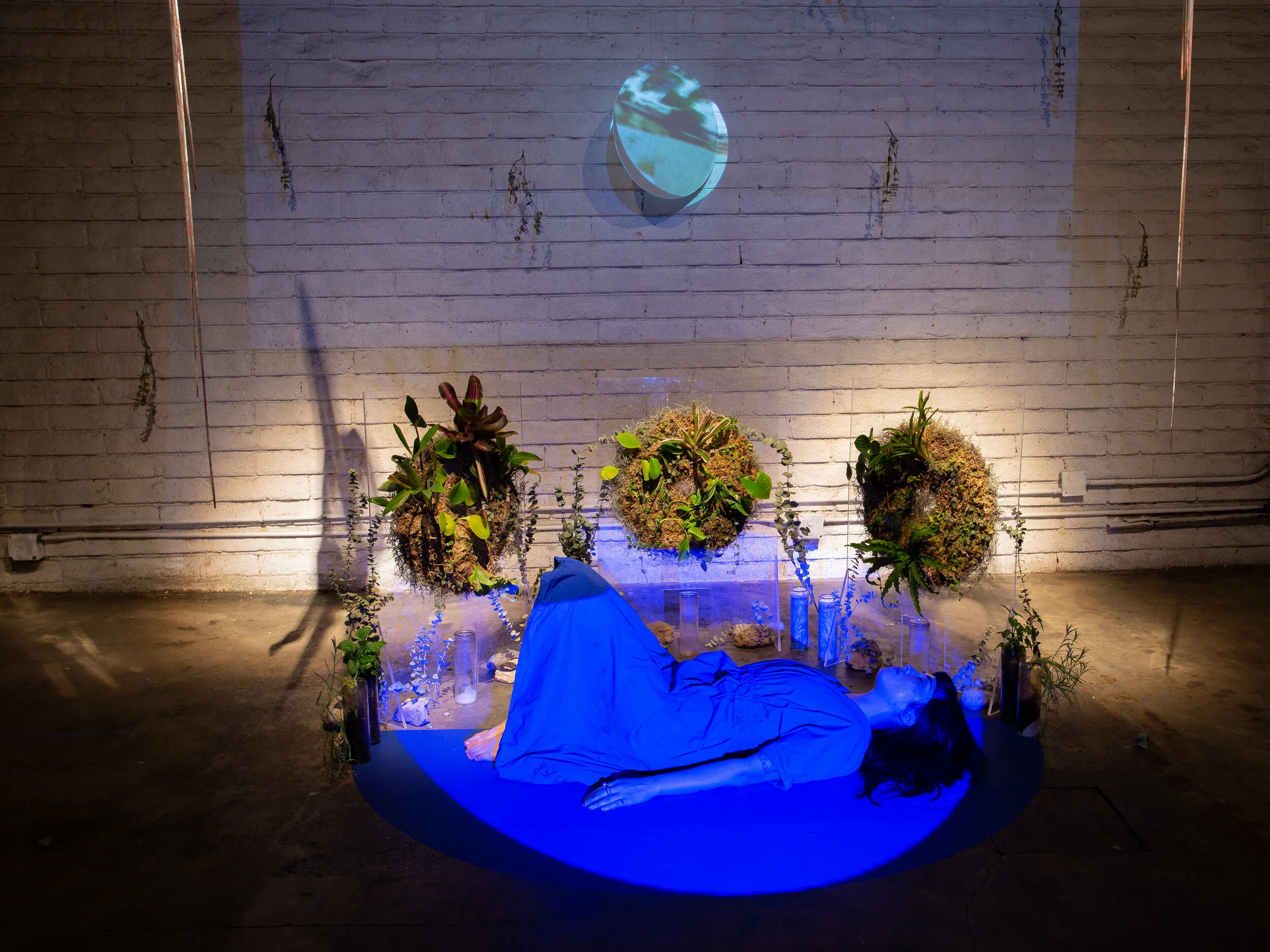
LOS ANGELES, 2026. On a gray, windy morning that hinted at spring, the ecological artist Paige Emery patched in from a remote location north of Los Angeles, where she works as a land steward, to discuss her art-life practice with Fulcrum Arts curator, Patrick J. Reed. Occasioned by Emery’s collaboration with Fulcrum Arts on the workshop series Tending Ecologies, which invited participants to learning how to heal their bodies in tune with earthly cycles of renewal, the discussion touched on ideas central to Emery’s work, including the experience of more-than-human communication, the potentiality of “plant dreaming,” and what it really means to feel blue.
PATRICK J. REED: For the record, would you please state your name and describe how you identify as an artist?
PAIGE EMERY: My name is Paige Emery. I am an ecological artist, herbalist, medicine woman, and land steward. I am Filipino on my mom’s side. I am English, Welsh, and Irish on my dad’s side. I am adopted into a Mexica lineage, and I live and work on Chumash lands.
PJR: I want to know more about your trajectory. You attended art school in Southern California in the mid-2010s, and your interests tended toward the visual arts. But over the past decade, you’ve been involved in deejaying, performance, installation work, healing arts, and ritualistic practices. We all develop over time, of course, but your trajectory seems deliberately motivated toward a conscientious rewriting of your role as an artist and your acceptance of that role as an ethic for living. What set you on that course?
PE: I went to art school and was involved in the art scene in a traditional way. But I became disenchanted very quickly. It seemed like art couldn’t actually make change within the type of world I was experiencing. Art wasn’t following through on what it said it could do in the face of really big crises. This made me stop making what I considered art, such as drawing and painting and sculpture, for about seven years.
I went back to school for research and critical theory, and focused on environmental and ecological philosophy. Throughout this learning experience, I was focused on how I could bridge science and rationality, on the one hand, and Indigenous knowledge and earth-stewardship, on the other hand. The world is dominated by Westernized, rational thought systems that inform conventional beliefs, and more bridges are needed to reach other ways of understanding. I think every kind of ecological and environmental science can be paralleled with intelligence of the earth in an embodied way, which is related to how we love the earth and how we’re in relationship with the earth.
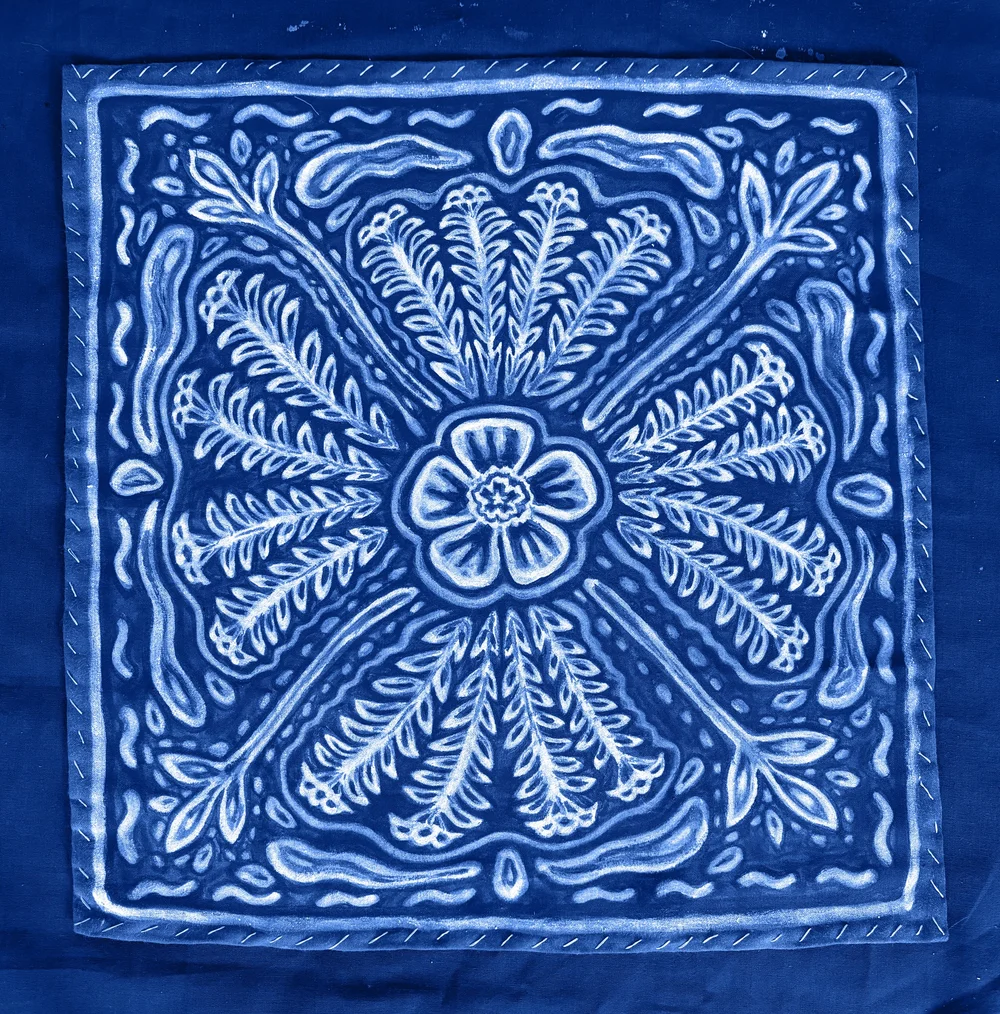
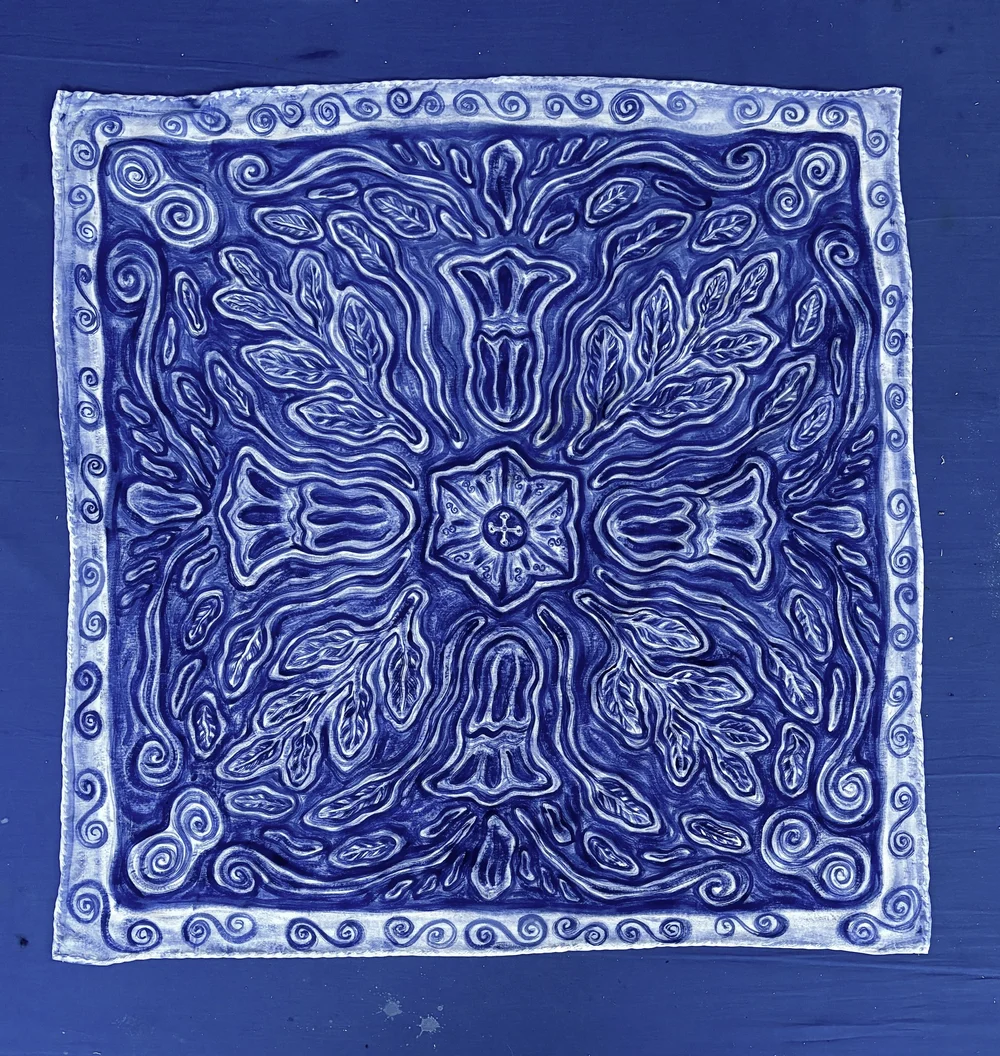
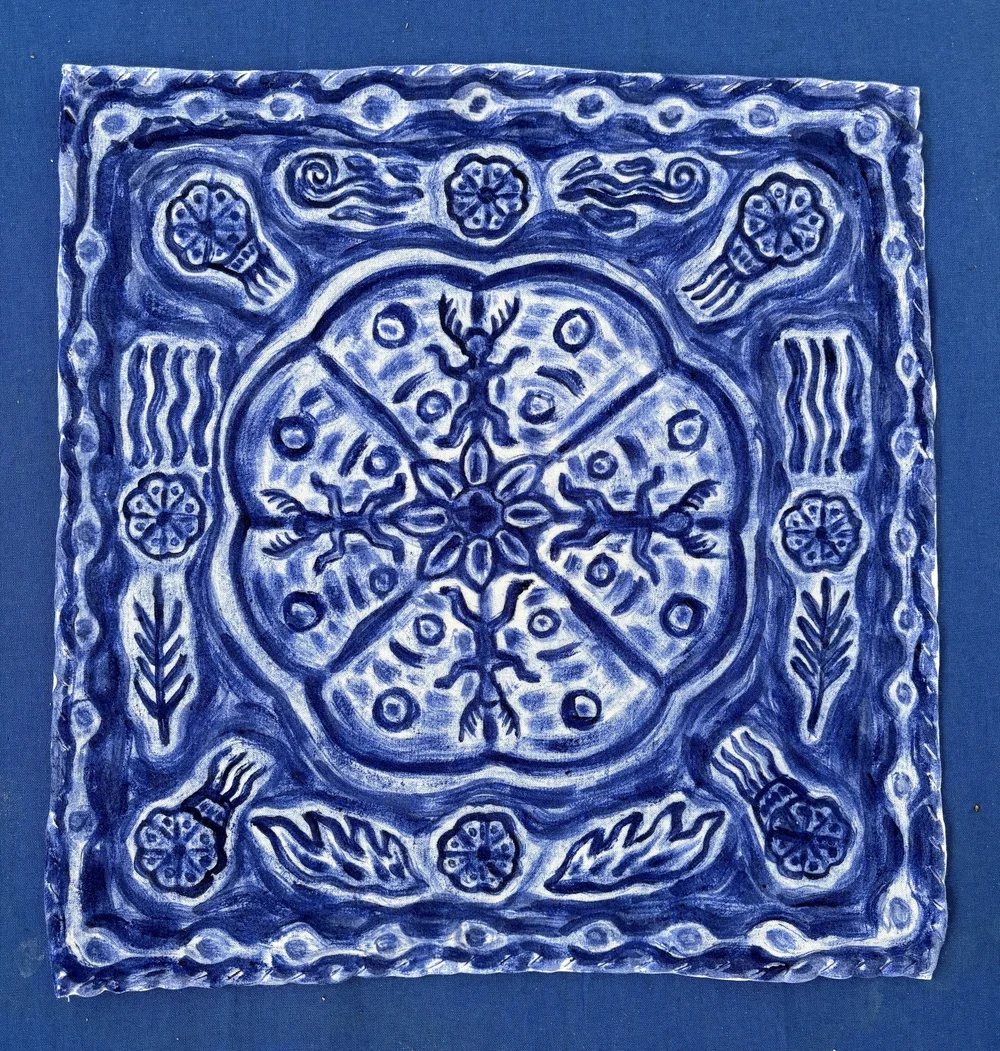
That research experience led me into herbalism as a self-study and self-healing practice. I was really sick growing up. I was in the hospital a lot. The doctors could never really treat what was going on in my body, and I eventually got to a point where I thought, “I need to figure out how to do this myself.” So I dove deep into herbalism and plant studies out of a somewhat desperate attempt to heal my own body. Through working with plants in an intentional way, I ended up healing my chronic illnesses.
At first, herbalism was just something very, very personal. I didn’t tell anybody that I was doing it because it felt experimental, and I was approaching it with the intention of wanting to do it in the absolute best way that I could, even if it was just for myself and my closest family members. I learned that to practice herbalism meant that I had to work with the plants and get to know the plants. I had to understand the water and the soil that the plants came from, and I had to understand how the plants work with the other plants in the ecosystem. I also had to understand the relationship of the Indigenous communities to the indigenous plants and the history and the ethnobotany behind how the plants got there. Importantly, I had to understand how to give respect to the plants.
Eventually, I came full circle back to art. Whereas before I used to separate my art practice from my healing, activism, and environmental practices, I had reached a point where I saw that all of this activity was a way of life, and that I needed to live in this way by sharing what I could share. I transmuted all of that through art. It’s all the same practice. The way that I make medicine, the way that I make a painting, the way that I do a ritual, the way that I do a performance, and the way that I give a talk all come from the same intention, the same foundation, and the same expression.
PJR: How would you describe your ecopoetics?
PE: My ecopoetics are intertwined with talks that I give, which are informative about environmental and ecological systems. When I first started lecturing, I knew I wanted people to feel the ideas in their hearts. We need to understand and intellectualize the world’s ecological crisis, but we really need a shift in consciousness to achieve solutions to it, and that shift comes from a place of the heart and an experience that is embodied. Poetry is a way for us to feel something. It’s a love language. When I speak of the earth, my language is a form of love and a form of relationship. When I want to talk about something or explain something or inform someone about the earth, I speak with a living language.
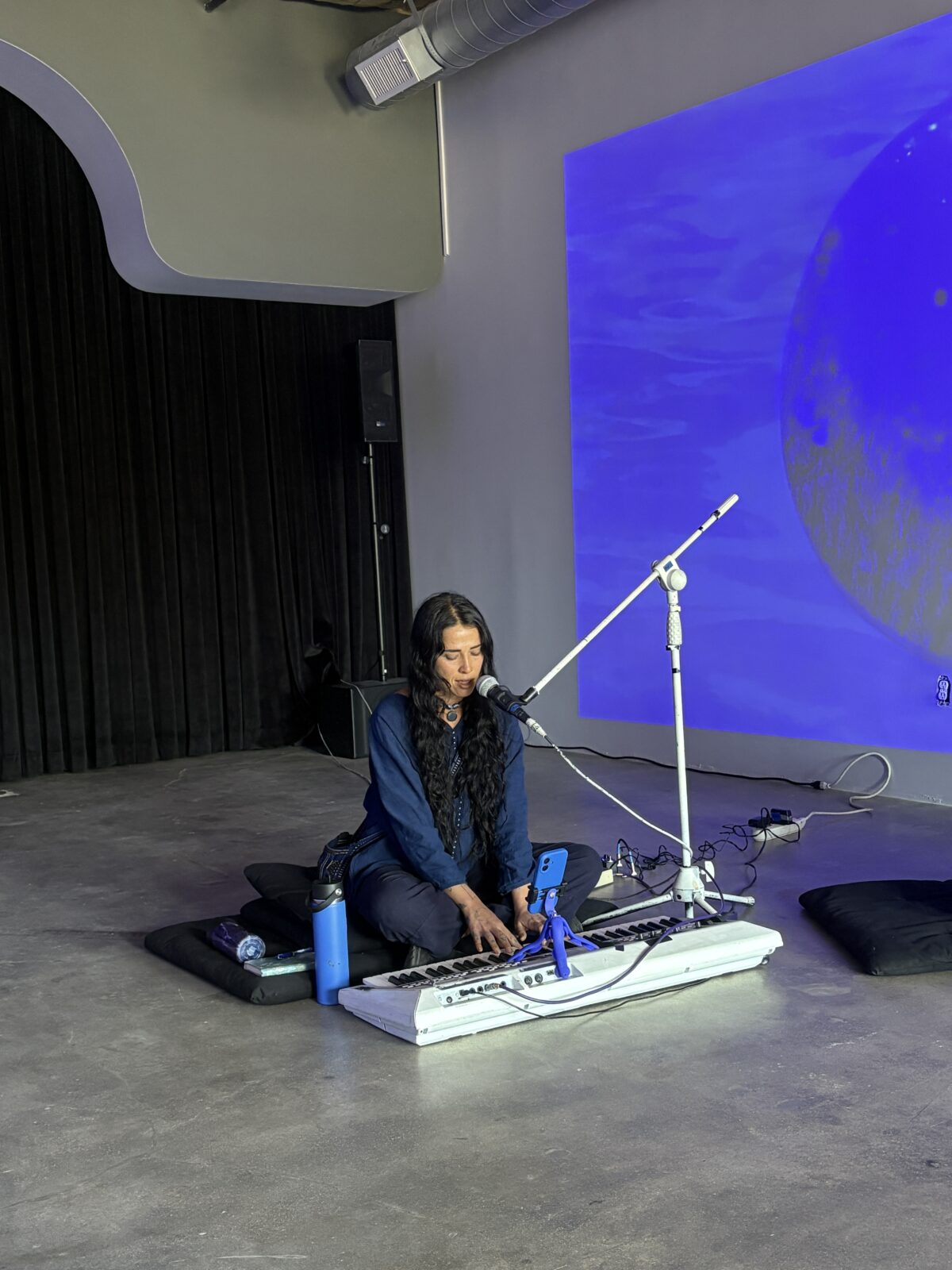
The earth moves through patterns and elements and systems, and there are all these different forms of communication that are living, breathing, more-than-human languages, which is something that we cannot even fathom. For me, poetry is this dance of playing with what language is, and it allows us to open up to feeling something outside of what conventional thought-scapes of the rational mind hold as definition and hold as the categories of “me” and “not me.”
But this is how we categorize and identify as humans. This is how we come into the world. We learn language to define things and to understand things. But now we are at a crisis point where we have to unlearn many things that are harmful to the planet. How do we do that? With the mind and in how we speak and think, all the way down to the unconscious level. Ecopoetics are a way of finding a meeting place with the earth, of finding communion. I dedicate my ecopoetics to the plants and the water around me because I’m also receiving their life in my body. With my ecopoetics, I ask, “Where is the meeting place of this language of the earth?”
PJR: You often speak about “plant dreaming.” What does that mean?
PE: Dreaming is a space between “here” and “there.” It’s a possibility space. There’s the unconscious mind-space that we enter in our dreams, and there’s the way we dream when we want to imagine a new reality that doesn’t yet exist. Both of these states require that you let down your guard or let down your defense mechanisms since your rational mind is always defending you. At rest, your mind allows you to go into the space of dreaming in a relaxed state.
There’s a correlation between relaxing your nervous system and being able to dream deeper. I believe that when you’re stressed, when you’re in survival mode, when your sympathetic nervous system is not relaxed, you’re in a place where it’s really difficult to dream. You’re thinking, “How can I survive?” And you can’t really think outside of that. This is a common state in our society. But when you’re able relax and feel yourself in a place of trust and security, of safety and calm, your ability to imagine something like an alternative future is much more open and receptive. Plants like nervines can help us get to this space, which I consider being between the world of right now and a world that could exist. Plant dreaming is about entering the in-between space where humans and plants can meet and imagine alternative ways of living.
PJR: What is your experience with more-than-human communication?
PE: May I tell a story of a plant that I felt was speaking to me?
When I first moved to my [former] house in Echo Park, there was a guava tree in a dirt lot and nothing else, until I started growing my garden. Seven years later, I started a garden with the houseless community at Echo Park Lake, and that garden grew for about eight months before it was destroyed by the city and the police. Within that same year, my landlord destroyed my home garden. She uprooted all the plants because she wanted to sell the property.
I was in a lot of grief over both of these events, especially because of their proximity to each other. And I was really questioning how I could be rooted in plants and in medicine when all this uprootedness was happening. At that time, I was also trying to connect with my ancestry and the roots of ancestral medicine. My grandparents in the Philippines had passed away, and I didn’t have any real connection or understanding of my Filipino history or its cultural traditions, especially pre-colonial traditions. So I would sit under the guava tree every day and meditate. When my garden was uprooted, all that was left was the tree, which made me think there was something really symbolic about how deeply rooted it was, and how, when all of the uprooting happened, it stayed resilient.
Then one day, I sat with a Filipino shaman. I was having stomach problems, and I wasn’t sure what to do about them, and she told me that I needed to work with the medicine of my Filipino ancestors. The medicine happened to be the guava leaf. So I started working with the leaf, and doing that opened up a path for me of understanding ancestral medicine. I realized that this tree, which had been in the yard all along, was the plant I needed for the illness and imbalance in my stomach. That tree taught me a lot about the medicine of place. It was so far away from the Philippines, like my own family, yet it happened to be right in my backyard.
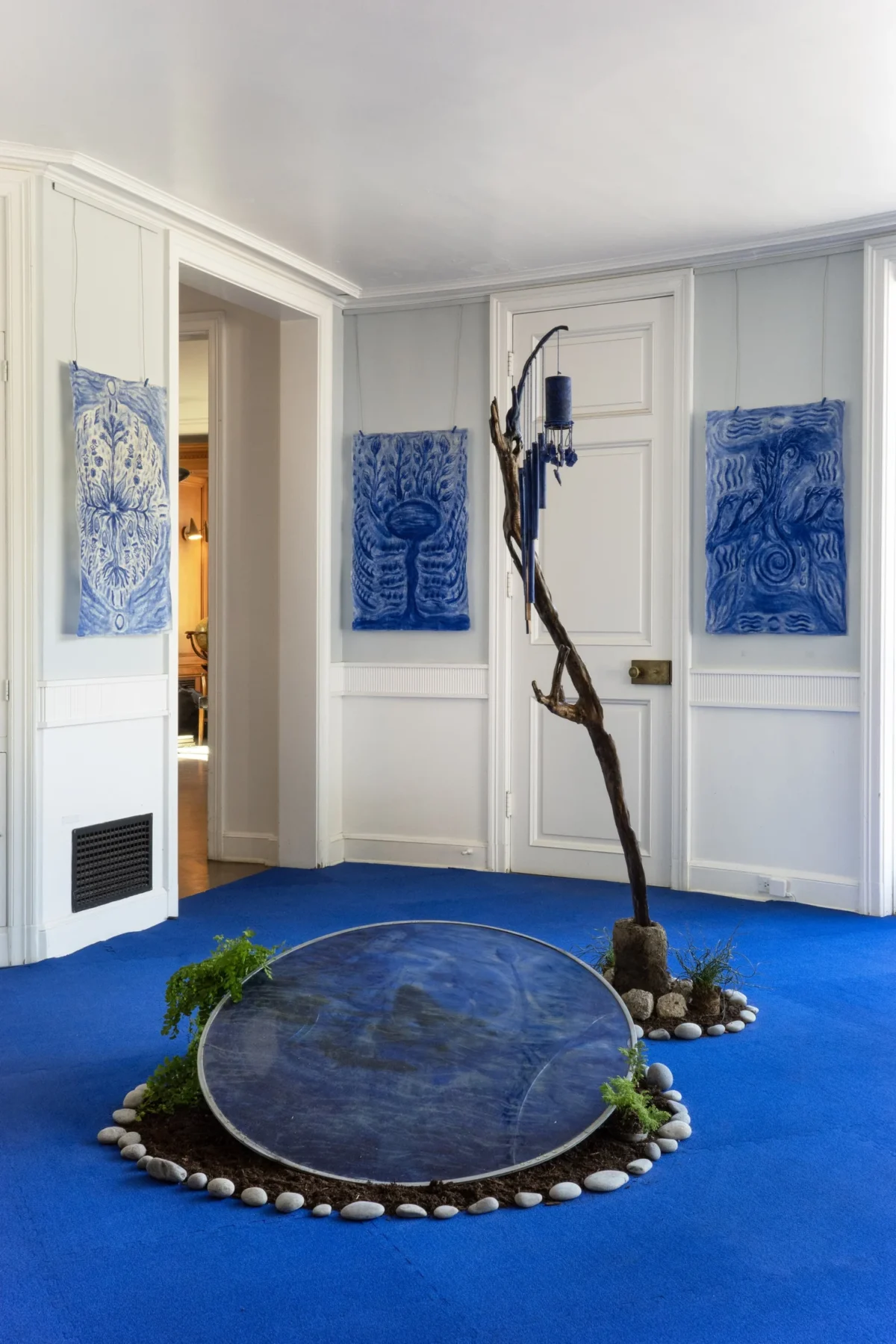
Fast forward to last year when I was in the Philippines, studying with a medicine woman. I was using a bolo knife to cut something, and I accidentally split open my finger. Blood gushed everywhere. I was in the middle of the rainforest, staying with a tribe, living in a bamboo hut. There were no hospitals, there was no first-aid. I was just surrounded by trees, and I was bleeding.
The medicine woman went to the nearest tree and grabbed some leaves and chewed them. Then she spat them onto my finger and said, “This will heal you.” She also gave me a tea to drink every day so that my body wouldn’t get an infection. The tree, of course, was the guava tree, growing wild. It was all around me. And it ended up being the tree that I needed every single day I was there.
The continued appearance of the guava felt like it was something beyond space and time, connecting me to my ancestors, connecting me to the Philippines, connecting me to the land that I was living on in Los Angeles, and connecting me to the grief that I was working through about the uprootedness of life and also the constant destruction on earth. The tree kept showing up, and that, for me, was a form of communication. It was through all of these connections that its medicine found me and helped me with what I needed and helped me understand something much deeper about what plants are here to do.
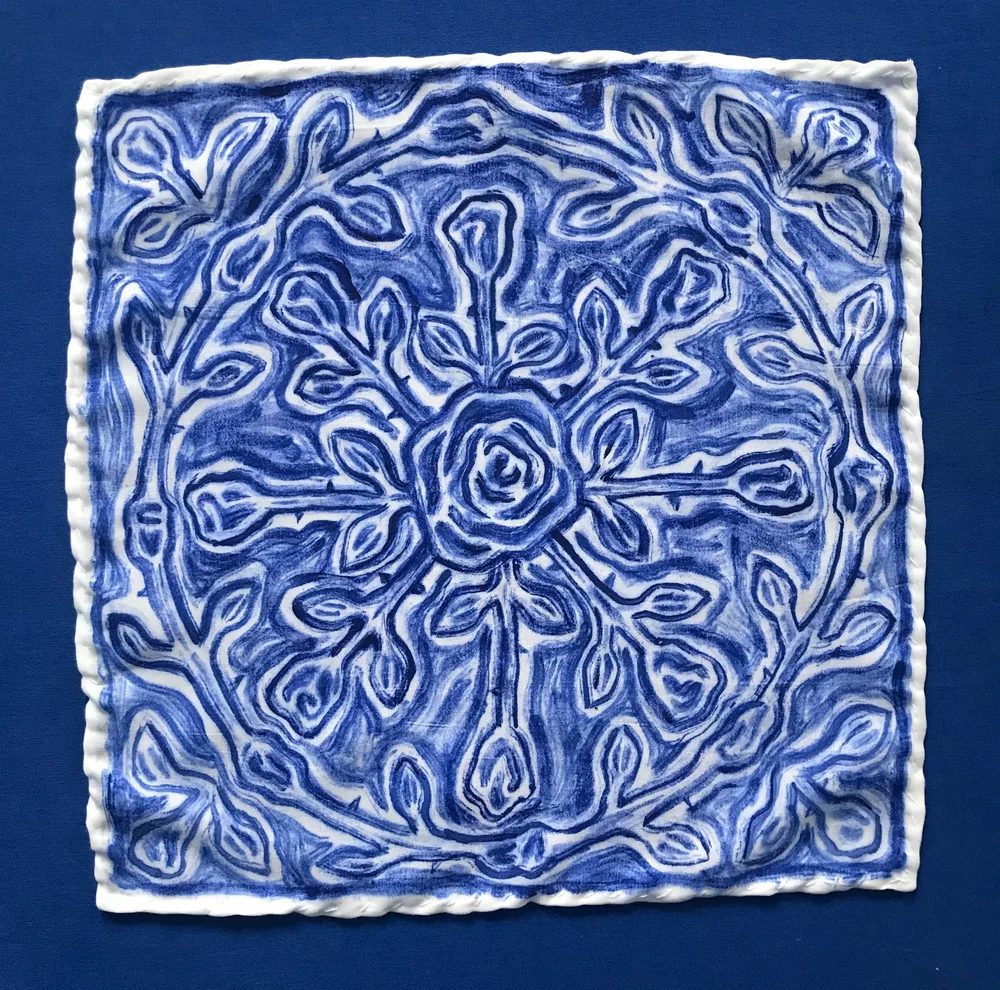
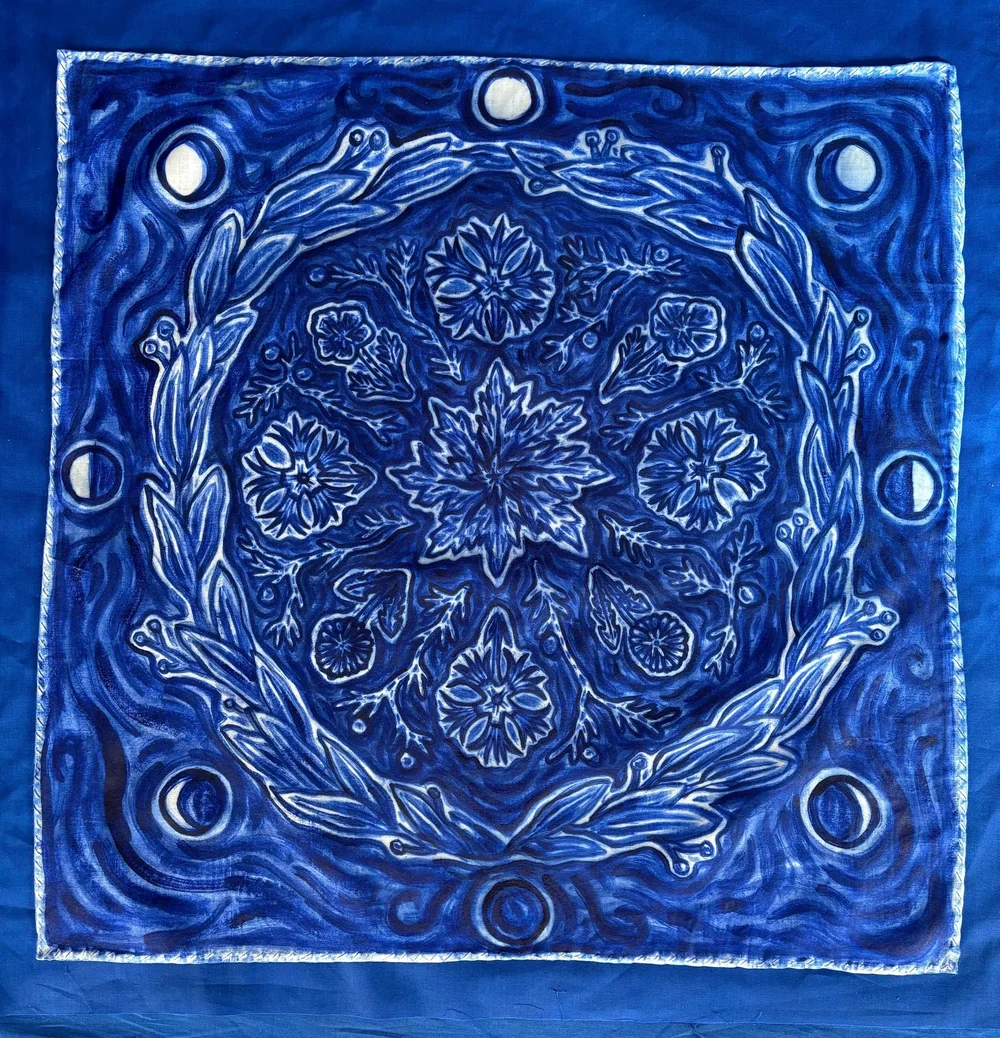
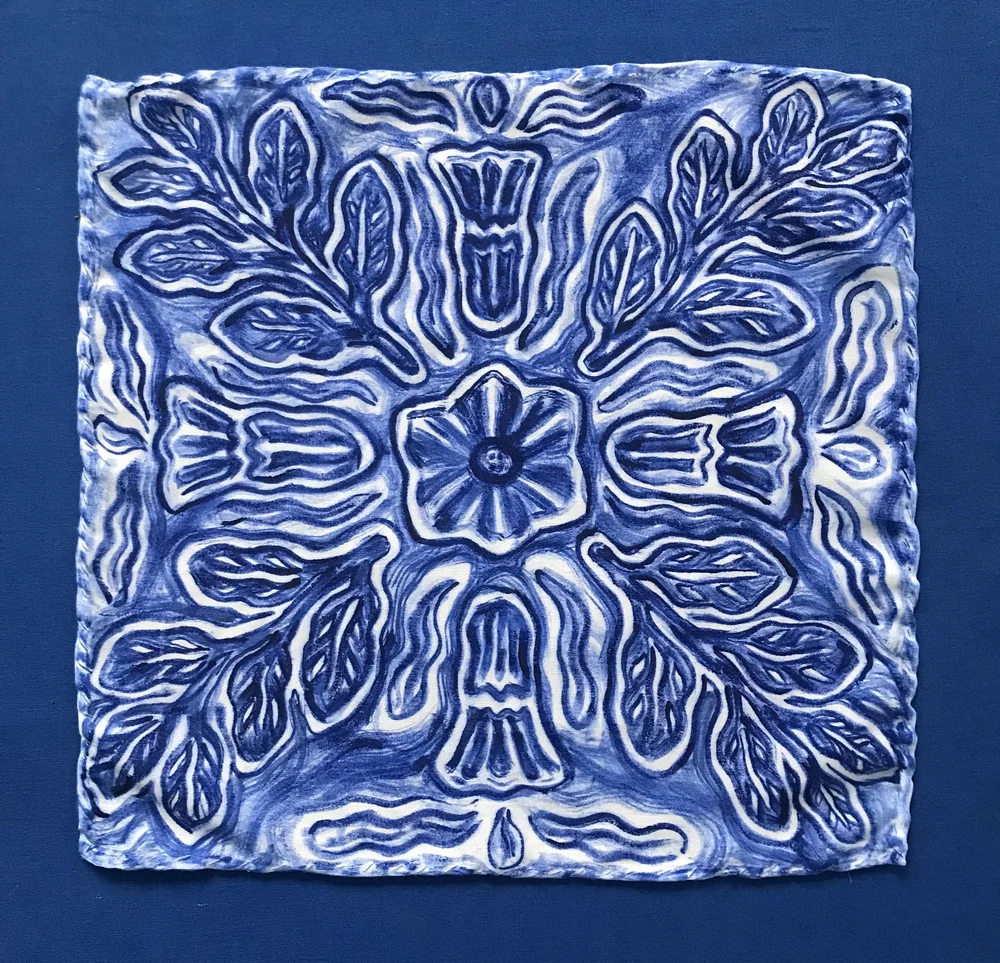
PJR: You have a signature trait. You wear blue, you paint with blue, you bathe yourself in blue light. Blue infuses all of your life and work. Would you tell me about your relationship to this color? When did it start? Why did it start? And why has it remained significant?
PE: Blue is universally relaxing. It offers an atmosphere of tranquility. I’m saying this loosely, without any sort of scientific evidence that blue relaxes everybody, but it’s a shared feeling, I think. And why is that? A big part of my work is about bringing people into states of openness and receptiveness, which, as I mentioned, has a lot to do with relaxing the body. And a big part of the healing work that I do with plants is about alleviating stress, which is one of the chronic sicknesses of our time. Stress is a factor we must address to be able to do the urgent ecological work that we all need to be doing. We need to take care of our bodies and manage stress to be resilient. I’m always thinking of how we can be in a place of nourishment and bodily relaxation, both for healing but also for listening deeper, thinking more clearly, and connecting. How I can produce that effect in all the senses is always on my mind. That’s why I do visual and sound work that includes smelling and tasting plants. All of the senses, individually and together, can bring people into certain states of being that cater the most to being in relationship with the earth.
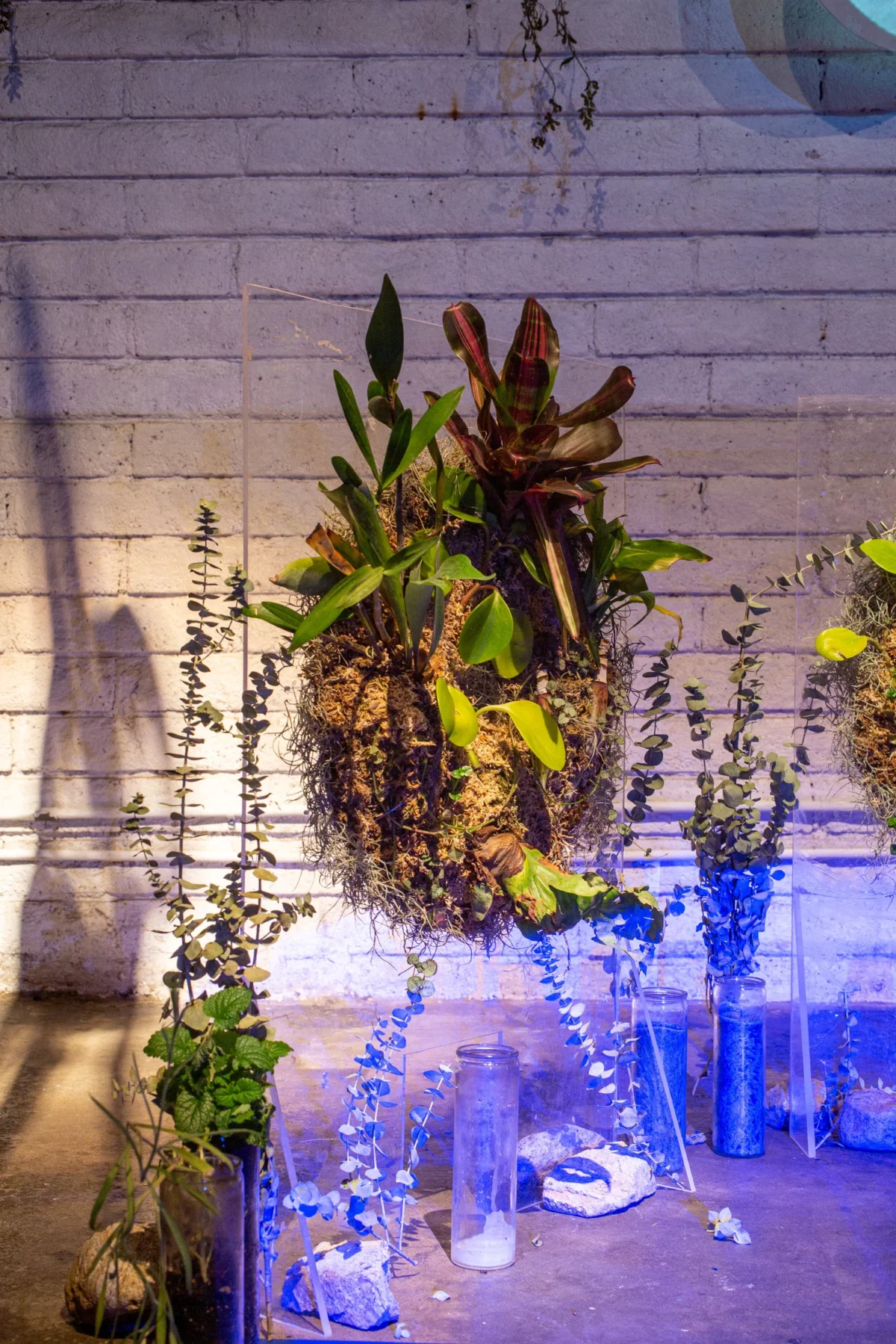
Blue is so fascinating to me. It’s one of the most difficult colors to make and one of the rarest colors in nature. Historians have said that it was the last color to be discovered as a “color.” When I think about blue being a color that was unknown for the longest time, I think about how we are surrounded by blue. We’re on a planet of water, and we came from water, and all the water is blue because the sky is blue. Everywhere we look, it’s blue above us and around us. But we’re inside this blue atmosphere so much that we don’t really see it. We can’t really grasp it, the same as when a fish in the ocean doesn’t know it’s in the ocean and doesn’t know it’s wet. That is what this color is to me, and for me that is symbolic of our relationship with nature. It’s so great that it’s unfathomable. We’re so connected to it that we can’t describe or see the connection. It’s intangible because we’re too much a part of it. I think that’s why we relax with blue. It creates a feeling of home. For me, it’s a feeling of home that I can’t understand, but it gives me a sense of tranquillity.
PJR: You are now a land steward. Do you think this new role will precipitate another evolution in your work as an artist?
PE: To be a steward, you have to be in tune with everything that’s going on with the land. This is something that is already affecting the way I live and think, so, of course, its affecting the way I create. I have to think about waste and energy movements. Everything here goes back into the earth. I have to be so careful.
Everything that I’m making right now, I’m making outside, and I have to think if what I’m making will be okay with the weather. I can’t be precious about things getting wet or being out in the sun. I actually have to think more about what it means to work with impermanence. As far as materials are concerned, I’m thinking a lot about sustainability. It’s not just about doing things to be environmentally friendly, it’s about being committed to a way of life that is going to last beyond our lifetimes. Everything we do makes a footprint, and our footprints really go beyond our own consciousnesses. Humans are geological forces of nature. To think of how we are part of this geological force is also to think about the way that we live our lives each day.
One of the most important things to me is about being in right relationship with the earth, and cultivating and sharing that relationship with others. So I bring a lot of embodied practices to my work to help get into these intimate, internal spaces from which we can build our relationships. While there are huge paradigm shifts that are needed for environmental solutions at a global scale, the healing of the planet is going to happen from the way we are in relationship with the earth. It matters where we’re coming from when we’re doing this work and how we’re listening to the earth, who knows how to heal herself. It matters how we are supporting this healing while being humble. The word humble comes from the root word humus, which means to be close to the earth. Humus is made from compost. It’s the regeneration of the soil. Decaying life creates new life. That’s the fertility of the soil that allows life to continue growing. And that is also what it means for us to be close to the earth, to listen to this force of life that is so much greater than ourselves.
To be in right relationship means to be in reciprocity. When I work with a plant, I start with a moment of gratitude and presence. That’s the basis for being in reciprocity. When we’re in reciprocity, we’re in a place of gratitude. We have to be really present and authentic for it to be real and for us to act from that place and move from that place and from there gain understanding. When we understand what life gives us and what the earth gives us, then we join a deeper desire of wanting to take care of the earth. Reciprocity is a way of life, and it can be so grand, but it can also come down to the simple ways that we drink a cup of tea, plant a seed, or mend the soil in our backyards. These small actions are as much a part of this practice as community work and regenerative work. Coming from that rootedness is how we can be in reciprocity, which is a consciousness that is the foundation of everything that I do.
ABOUT THE ARTIST
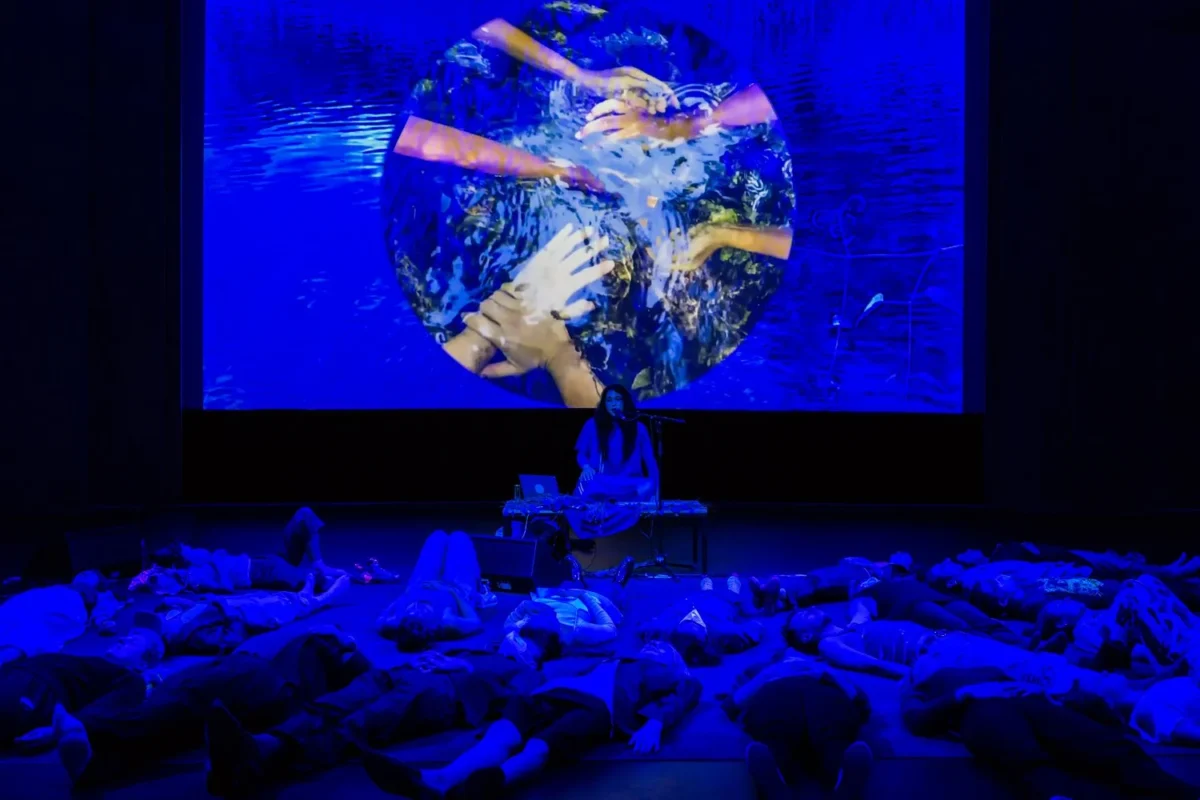
Paige Emery is an ecological artist and herbalist exploring ways of remembering the earth. Her work interweaves healing arts and critical ecology, ancestral memory and embodied futurities, ecopoetics and socioenvironmental praxis. As a way of life, her practice is rooted in reciprocity with the earth.
Paige’s practice stems from a background in art, herbalism, ancestral medicine, eco-philosophy, environmentalism, and learning from the earth. Her work serves as a bridge between the internal and external landscapes of ecological consciousness through guided plant rituals, multispecies installations, ecopoetic meditations, embodied ecology walks, herbal healing sessions, music soundscapes for more-than-human connection, and sharing plant remedies with her community.
Previous works include art installations for more-than-human time at Biosphere 2, Arizona; multispecies ecopoetics at the Museum of Contemporary Art, Los Angeles; sonic meditations at Haus der Kulturen der Welt, Berlin; plant rituals for memory gardens at Biennale Gherdëina, Italy; Kamayan ceremonies with Active Cultures x The Brick for PST ART: Art & Science Collide, presented by Getty; guerrilla gardens with houseless neighbors as acts of resistance and care at Echo Park Lake; guided decolonial ecology walks with the Fowler Museum; and her plant remedies for resilience between worlds at Earth Medicine Apothecary.
More Issues
SURFACE AND MEMORY: A CONVERSATION WITH KATHIE FOLEY-MEYER
Patrick J. ReedThe artist and researcher Kathie Foley-Meyer joined curator Patrick J. Reed to discuss her creative practice and scholarship on ocean memory and the territoriality and temporality of Blackness.
- Generation
- Growth
- Invisibility
- Land and Sea
- Networks
- Perception
- The Body
- Visualization
TRISTAN DUKE: TRANSITIONAL LENSES (opens in a new tab)
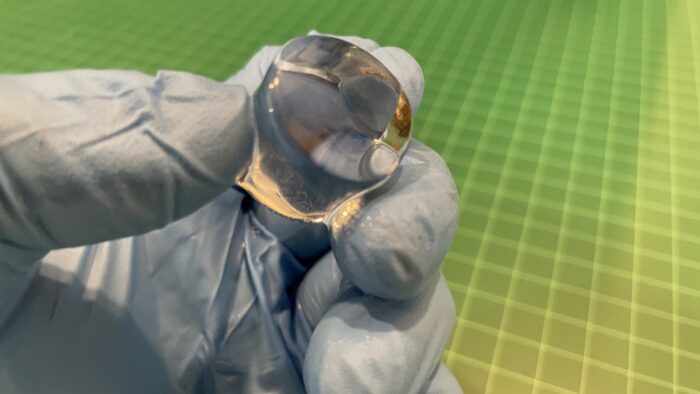
Patrick J. ReedArtist Tristan Duke photographs the Placerita Oil Field and the Tehachapi Wind Resource Area using lenses made from frozen drinking water. Fulcrum Arts’ Curator, Patrick J. Reed, goes along for the ride.
- Digging
- Extraction
- Generation
- Growth
- Invisibility
- Land and Sea
- Networks
- Perception
- System Failure
- Visualization